![SEE Business Solutions Logo [White] | Newcastle](https://seebusinesssolutions.com.au/wp-content/uploads/2022/12/see-svgLogo-copy-2.svg)
Walk down any residential street where there’s building work happening and you’ll see two types of sites. One has angry neighbours complaining about noise, dust all over their cars, and blocked driveways. The other has neighbours who wave to the crew, refer them to friends down the street, and defend them when council comes knocking.
The difference between these two scenarios isn’t just about keeping the peace. It’s about building a competitive advantage that most builders completely overlook.
After years of coaching builders, we’ve seen firsthand how neighbour relations can make or break a building business. Most tradies have no idea that the people living next door to their projects are either their best marketing asset or their biggest liability.
Let’s break down exactly how neighbour satisfaction becomes a competitive edge, and more importantly, how to turn every street you work on into a referral machine.
A successful job isn’t only about workmanship and meeting deadlines. It’s about how the project is perceived by the people who live around it. When you get neighbour relations right, several things happen that directly impact your bottom line:
You protect your reputation where it matters most. Residential work lives and dies by word of mouth in the local area. One complaint at a weekend barbecue can cost you three jobs on that street. One positive mention can land you those same jobs without lifting a finger.
You reduce time-wasting conflicts. Good relations mean fewer complaints, less council scrutiny, and smoother permit processes. You spend less time dealing with disputes and more time building. Projects run faster when you’re not constantly firefighting neighbour issues.
You create pricing power. When you’re known as the builder who actually respects the neighbourhood, you’re not competing solely on price. Clients will pay more to hire someone who won’t create problems with their neighbours, and you have leverage because you’ve proven you can work without generating complaints.
A short pre-start letter or flyer goes a long way. Introduce your company, list start and finish dates, outline working hours, describe the noisiest activities, and give one named contact with a mobile number. Drop the letter to immediate neighbours and any homes that share a boundary or access road.
Follow up on day one with a friendly hello. If the programme changes or a particularly loud task is scheduled, let people know the day before. Clear expectations reduce anxiety and complaints. This simple step costs you nothing and prevents issues before they start.
Here’s a simple template you can adapt:
Hi, we’re working on a new project at 24 Oak Street.
At times it might get a little busy and you can expect some standard construction noise.But if there is anything that is particularly offensive or intrusive to your day to day, please don’t hesitate to call this number and let us know so we can help make this an easy period for you: [04 XXX XXX].
Kind regards,
[Your Name], [Business Name]
Good neighbour etiquette starts with site layout. Place generators, concrete mixers, and saws as far from the neighbours windows and outdoor living areas as practical. Use the house and temporary fencing as barriers to direct noise upward rather than across to a neighbour’s deck.
Set aside a clean route for residents to access their homes and bins. Keep materials stacked neatly, footpaths clear, and signpost any temporary diversions. Park considerately, avoid blocking driveways, and try to organise deliveries outside of the peak hours people are heading to work, as getting held up trying to leave the street before a long day is a frustration the neighbours won’t forget.
Noise is most effectively controlled at the source. Choose battery or electric equipment rather than petrol where possible. Use modern blades and keep them sharp. Maintain silencers and acoustic hoods on generators. Cut bricks and pavers wet where appropriate, which reduces both dust and sound.
Where possible, schedule the loudest tasks for mid-morning or mid-afternoon, when people are more likely to be out.
Heavy trucks and frequent van movements are a common source of friction. Try to schedule deliveries inside working hours and avoid school run periods. Use smaller vehicles for deliveries if streets are tight. Don’t allow drivers to block the road for long periods.
If access will be restricted, put out signage or drop a note in their mailbox to inform neighbours the day before. Keep a spotter ready for tricky manoeuvres and always leave space for emergency vehicles.
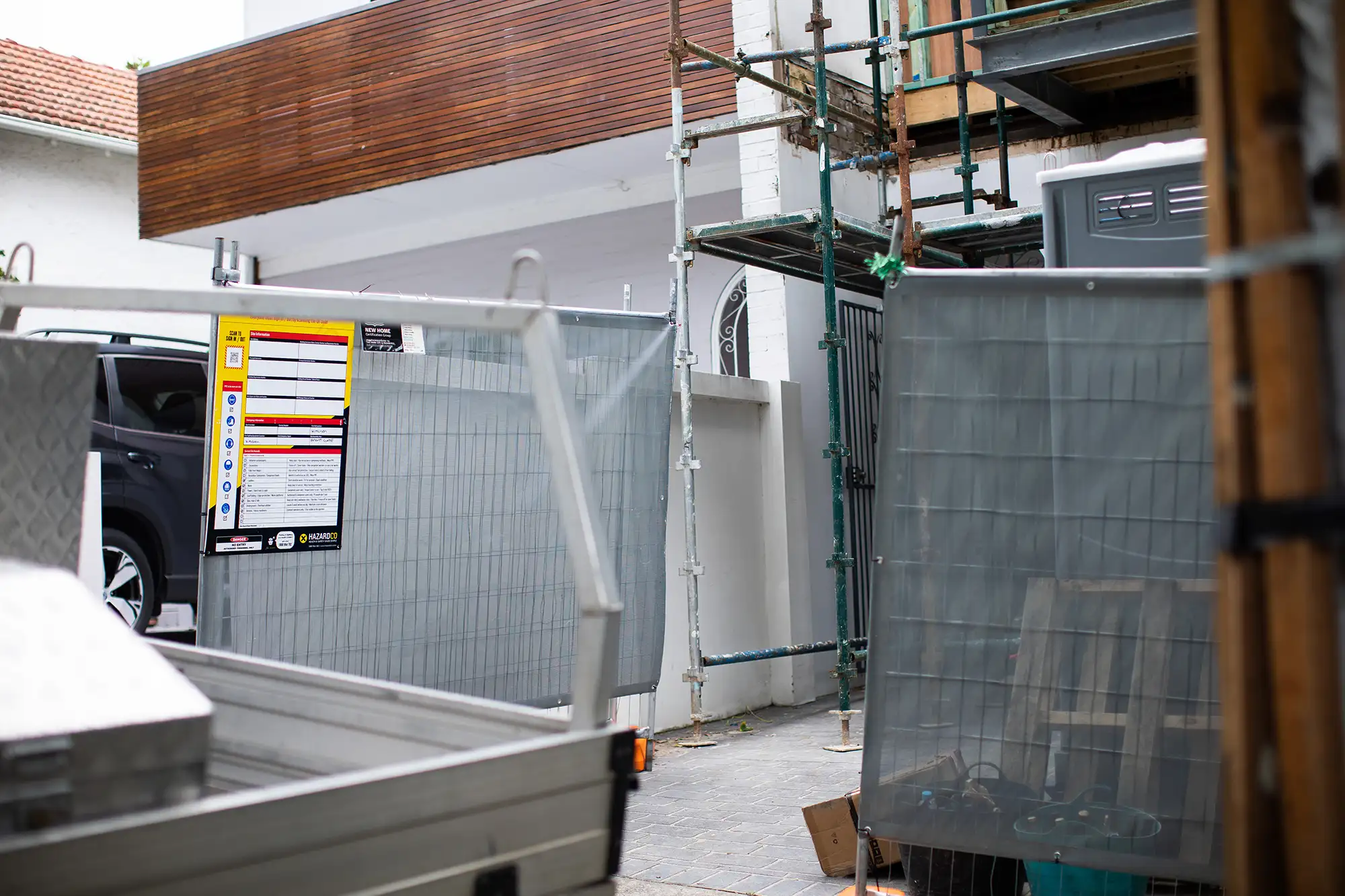
Dust is as frustrating as noise for neighbours. Use water suppression on saws and breakers, sheet up when cutting inside, and consider temporary hoarding or mesh to stop debris blowing onto neighbouring gardens.
Sweep the footpath daily, especially near drains. Store cement, sand, and chemicals under cover. Protect existing surfaces with boards or mats, and clean tyre tracks from roads or footpaths. A clean site tells neighbours you respect their space.
Music on site should be kept low and never audible beyond the boundary. Swearing travels further than you think and reflects badly on the business. Set a simple code of conduct with your team: shirts on, PPE on, and cigarettes discarded in a fire-safe bin rather than on the footpath.
If you have a site shed, keep it tidy and out of sight lines where possible. Your crew represents your brand every minute they’re on site. Make sure they act like it. Just as your workwear speaks volumes about your professionalism, so does your team’s behaviour on site. Neighbours notice everything, from the condition of your uniforms to the language your crew uses.
Overflowing skips, scattered rubble, and unsorted rubbish sitting in plain sight for days on end tells neighbours exactly how you run your sites. Keep bins adequate and clearly labelled for waste segregation, arrange regular skip collections, and keep them covered when full.
Position portable toilets discreetly and maintain them frequently. If your team smokes or vapes, set a designated area away from boundaries.
When a neighbour raises a concern, thank them for telling you, then act quickly. Listen first, repeat back the issue so they know you understand, and offer a practical fix with a timeframe. Keep a site log of complaints and actions taken.
If a mistake was made, apologise without making excuses. Follow up the next day to confirm the problem is resolved. Many disputes are defused by simple acknowledgement and visible action. This is what separates professional builders from reactive ones.
The last impression is just as important as the first. When your build is ready for handover, check neighbouring fences and gardens for any accidental damage and drop a thank-you note to your immediate neighbours.
Consider a small gesture like a local café voucher – this goes a long way after months of disruption. Ask your client to pass on your details in case anyone nearby has questions. A clean, considerate finish turns what could have been a frustrating experience into a story people actually want to tell – and that’s worth more than any ad you’ll ever run.
Neighbour satisfaction isn’t about being nice. It’s about building a sustainable competitive advantage in a crowded market. The builders who understand this are the ones growing six and seven-figure businesses through referrals, while those who overlook it are stuck wondering why they’re always scrambling for the next job.
Good neighbour relations protect your reputation, reduce operational friction, enable faster project delivery, attract better clients, and create a referral engine that works for you long after the project is completed. Small changes to how you and your crew interact with the community can lead to significant changes in the quality and quantity of work coming through your door.
At SEE Business Solutions, we work with builders to implement systems that turn good intentions into consistent results. If you’re ready to build a business that grows through reputation rather than constant marketing spend, get in touch and let’s talk about how neighbour satisfaction can become your competitive edge.