![SEE Business Solutions Logo [White] | Newcastle](https://seebusinesssolutions.com.au/wp-content/uploads/2022/12/see-svgLogo-copy-2.svg)
Walk onto any construction site and you’ll see a range of workwear, from pristine hi-vis and steel caps to gear that’s seen better days. Most tradies don’t realise that what they’re wearing is doing more than just protecting them onsite. It’s either winning you clients or losing you thousands in potential work.
After ten years of coaching builders, we can tell you that workwear is one of the most underestimated tools in your business. Most tradies have no idea how much it influences client perception and business growth.
Let’s break down exactly how your work gear might be costing you clients, and more importantly, what you can do about it.
When you arrive at a quote or client meeting, they’re assessing you before you’ve even introduced yourself. Stained shirts, worn-out boots, or mismatched gear sends a message about how you run your business. Fair or not, clients make split-second judgments about your professionalism, attention to detail, and reliability based on your appearance.
Think about it from their perspective: if you can’t maintain your own gear, how will you maintain their project? This is especially critical for residential work where homeowners are inviting you into their personal space and trusting you with their largest asset.
Think beyond the client you’re currently working for. Their neighbours are also watching. They’re walking past your site daily, seeing your crew, noticing your vehicles. Residential work lives and dies by word of mouth, and one complaint about “those scruffy tradies” at a weekend barbecue could cost you another three jobs on that street.
Quality, branded workwear does several things for your business:
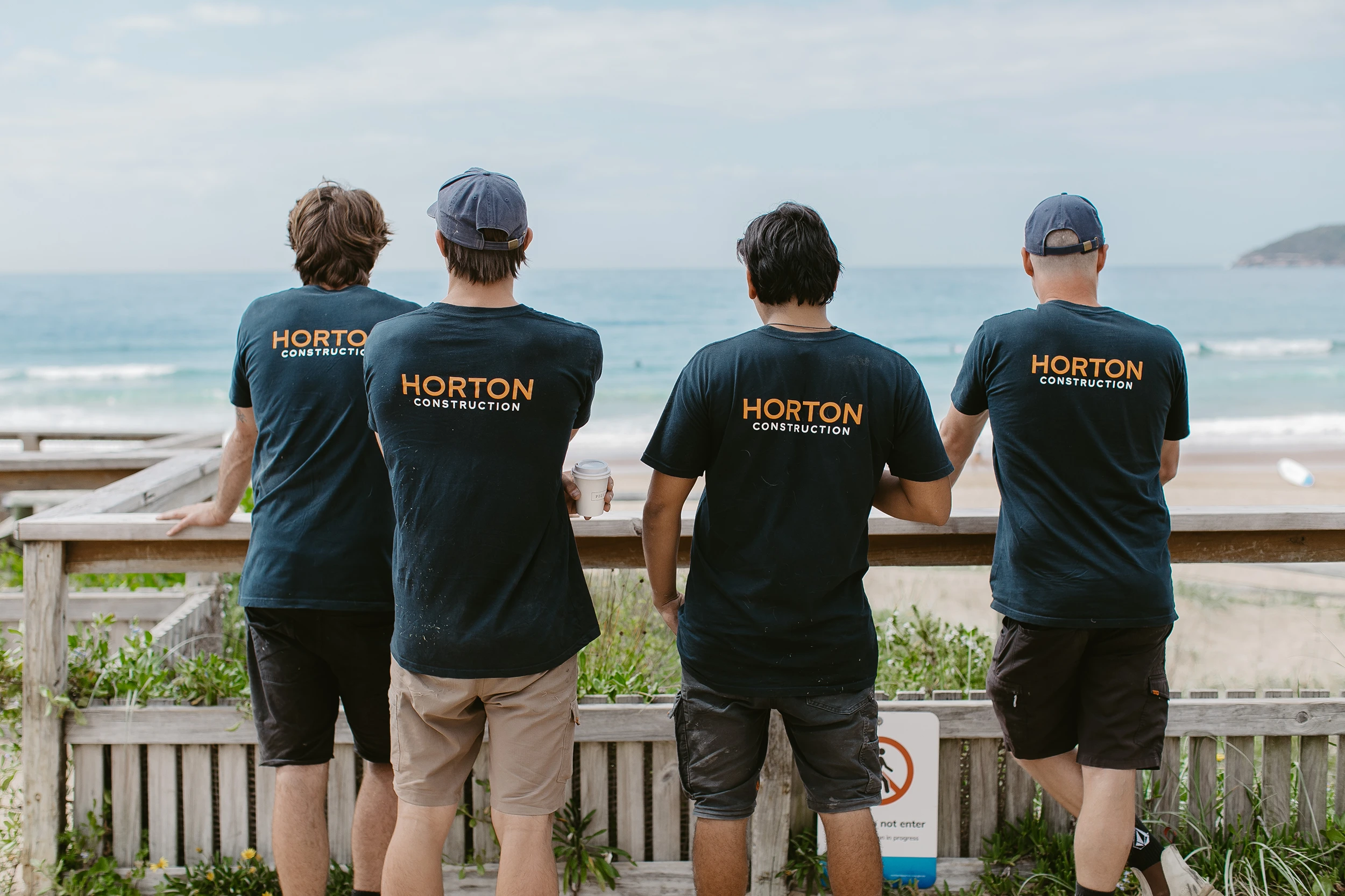
It builds trust. Matching uniforms with your company logo signal that you’re established and take your business seriously. It suggests systems, processes, and professionalism.
It creates consistency. When your entire team turns up in matching gear, it demonstrates that you run a tight ship. Clients see organisation and team cohesion, which translates to confidence in your ability to deliver.
It differentiates you from competitors. In a sea of quotes, the tradie who looks the part often gets the job, even if they’re not the cheapest. You’re competing against other builders who might be just as skilled, but presentation can be the tiebreaker.
It’s working for you all day, every day. Your team is out in public all day – they’ll stop by a cafe on the way to site and might drop into Woolies on the way home. That’s hundreds of impressions per week in your local area, completely free advertising. This is what smart marketing for builders looks like – not just Google Ads and Instagram Reels, but a comprehensive strategy that builds your brand visibility in your local market every single day.
Let’s put some numbers to this. If scruffy workwear costs you one $200,000 job per year because a client went with a more professional-looking competitor, that’s a direct loss. But the indirect costs are even higher:
You miss out on referrals from that client. Word-of-mouth recommendations from quality clients are gold, and you’ve lost that opportunity.
Your crew’s morale suffers. When your team looks like a professional outfit, they act like one. There’s a pride factor that influences work quality and customer service.
You attract the wrong clients. Clients who choose solely on price (often because you don’t present as premium) tend to be more difficult, have unrealistic expectations, and are slower to pay.
You don’t need to break the bank, but you do need to be intentional. Ask yourself: does everyone look like they’re part of the same business, or like a random group you found at Bunnings that morning?
Here’s what a professional setup looks like:
Branded shirts with your logo. Polo shirts for quotes and client-facing work, work shirts for when you and the team are on the tools. Clean, fitted, and replaced when they’re past their best.
Quality work pants or shorts. They don’t need your logo, but they should be clean, in good condition, and appropriate for the job.
Good boots and safety gear. This is non-negotiable for safety, but clean, well-maintained PPE also shows you take your work seriously.
Clean vehicles. While not technically workwear, your ute or van is part of your presentation. Signage should be professional, and the vehicle should be clean (or at least not filthy).
If you’re reading this and realising your team’s workwear needs an upgrade, here’s how to approach it:
Budget for it. Workwear is a business expense and a marketing investment. Set aside funds quarterly for replacements and new team members.
Set standards. Make it clear to your team what’s expected. Clean shirts for client meetings, specific gear for site work, and consequences for repeatedly turning up in poor condition.
Lead by example. You’re the business owner. If you’re not maintaining your own appearance, your crew won’t either.
Make it easy. Provide enough sets so your team can rotate through washes. If you expect high standards, you need to make it practical for them to meet those standards.
Your workwear is working for you or against you every single day. It’s part of your brand, your marketing, and your sales pitch. The tradies who understand this and invest accordingly are the ones building six and seven-figure businesses, while those who overlook it are stuck wondering why they’re not getting the good jobs.
You wouldn’t turn up to quote a high-end renovation in a beat-up ute with tools falling out the back. So why would you turn up in gear that sends the same message? Small changes to how you and your crew present yourselves can lead to significant changes in the quality and quantity of work coming through your door.
What message is your workwear sending to potential clients right now?
Featured image: from our team photoshoot with Northern Beaches builder, Horton Construction